Accurate Survey Line Systems for Seamless Construction
Survey line system at Dreamscape Designs ensure the highest level of precision in land mapping and project planning. Our Survey line system ensures accurate measurements and alignment, forming the foundation for successful construction and development projects.
Additionally, it provides the precision needed to ensure smooth and efficient execution at every stage. Furthermore, our Survey line system ensures precision throughout every phase, enabling seamless project execution and actively reducing the likelihood of errors.
As a result, this reliable system significantly contributes to efficient workflows, enhancing both time management and cost-effectiveness.
A survey line system for CCTV refers to the arrangement or layout of CCTV cameras in a particular area, organized in a structured manner along specific lines or paths to monitor activities effectively.
The “survey line system” represents various routes or regions where people place cameras to ensure optimal coverage and surveillance. As a result, the survey line system enhances security by providing comprehensive monitoring across the designated area.
Planning and design
Before installing the survey line system or CCTV system, a team conducts a survey to determine the best locations for cameras based on factors like field of view, lighting, and possible obstructions.
Then, they establish survey lines to map out the paths cameras will monitor. As a result, this process ensures optimal placement for effective surveillance and security.
Camera Placement
The team strategically positions cameras along the survey lines to ensure comprehensive coverage of the area.
This setup includes both static (fixed) cameras and PTZ (pan-tilt-zoom) cameras, providing a combination of wide-angle and focused views. As a result, this approach significantly enhances the system’s ability to monitor various areas effectively.
System Integration
The surveillance system integrates the camera feeds into a central monitoring system.
This layout ensures that the cameras work together seamlessly to avoid blind spots, with connections typically made via cables or wireless systems. Consequently, the system delivers continuous, uninterrupted coverage across the monitored area.
Security & Monitoring
The control room or software interface allows operators to monitor the survey line system in real-time, where they can view surveillance footage live or record it for future analysis.
As a result, this setup enables efficient oversight and quick response to any security concerns.
Key Elements of CCTV
1.Cameras:
Function: The primary function is to capture video footage of the monitored area.
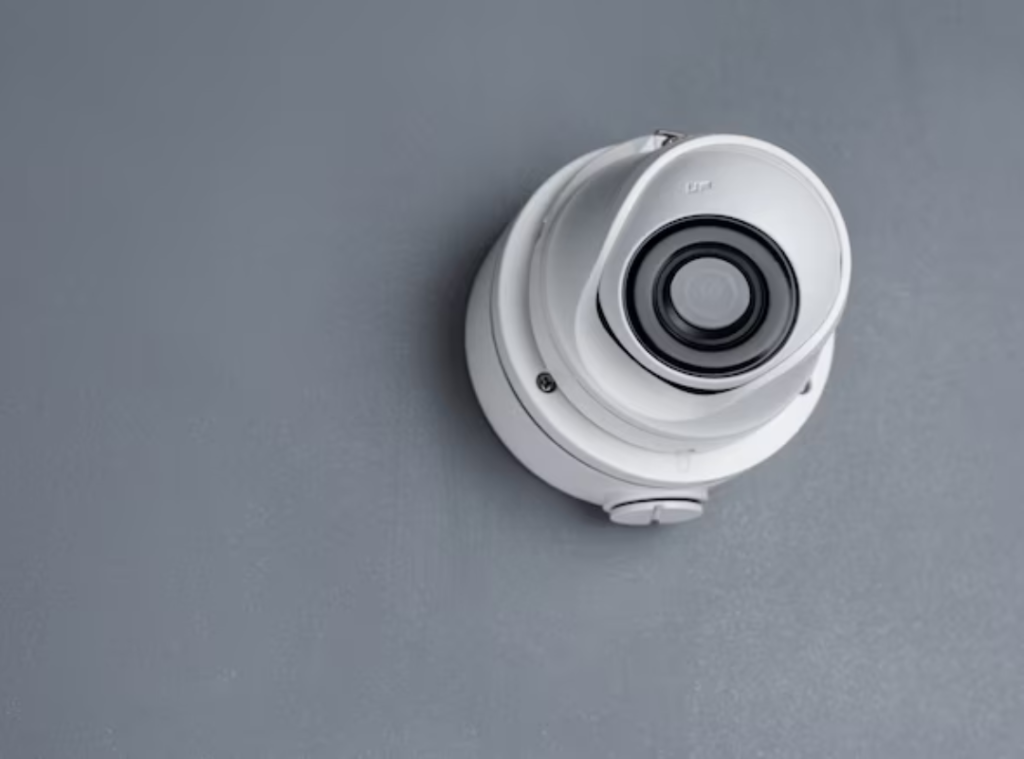
Types: Options include analog or digital (IP) cameras, with varieties such as dome, bullet, PTZ (pan-tilt-zoom), and thermal cameras to meet specific surveillance needs.
Resolution: The camera’s resolution determines the clarity of the video, with options ranging from HD to 4K, ensuring clear and detailed footage.
Lens: The lens type affects the field of view and focus, with choices between fixed or varifocal lenses to provide flexibility in monitoring different areas.
Night Vision: Infrared (IR) sensors enable surveillance in low-light conditions or total darkness, ensuring round-the-clock security.
2.Monitors:
Function: The system displays live footage from the cameras, providing real-time monitoring of the area.
Types: Standard display monitors often feature multiple screens or split screens, allowing operators to monitor several cameras simultaneously.
Resolution: Resolution determines clarity, providing high-quality footage for accurate surveillance and enhancing detail identification and security.
3.Digital Video Recorder (DVR) or Network Video Recorder (NVR):
Function: The system records and stores video footage from the cameras, ensuring that important events are captured for future review.
DVR: A DVR works with analog cameras, converting analog signals into digital data for storage. As a result, it enables the recording and playback of video footage in digital format.
NVR: An NVR is used with IP cameras and stores digital video data directly from the network, allowing for efficient, scalable storage solutions.
Storage: Storage options like hard drives or cloud storage offer flexibility for long-term retention, based on capacity and accessibility needs.
4.Cables and Connectors:
Function: The system transmits video signals from cameras to devices, ensuring seamless communication between components.
Types: Transmission occurs through coaxial, Ethernet, or fiber optic cables, depending on the system’s distance and video quality requirements.
5.Power Supply:
Function: The system transmits video signals from cameras to devices, ensuring seamless communication between components.
Types: Transmission uses coaxial, Ethernet, or fiber optic cables, depending on distance and video quality requirements.
6.Control Devices:
Function: The system allows remote or manual control of cameras, including PTZ features, enabling position adjustments as needed.
Types: Users can control cameras with joysticks, keyboards, or software, enhancing versatility and responsiveness.
7.Motion Detection:
Function: The system automatically triggers recording or alerts when motion is detected in a monitored area, reducing the need for constant monitoring.
Settings: You can customize settings for zones or times, ensuring precise responses and reducing unnecessary footage, boosting efficiency.
8.Network Infrastructure (for IP systems):
Function: The system connects the cameras to the NVR, enabling remote access and management of the CCTV system via the internet or local network.
Components: Key components like routers, switches, Wi-Fi, and firewalls ensure secure, efficient communication between cameras and the NVR for reliable remote monitoring.
9.Remote Access:
Function: The system allows users to access live video or recorded footage remotely through a mobile app or web browser, providing flexibility and convenience.
Security: It ensures secure access through encryption and authentication, protecting the system and keeping user data safe.
10.Software:
Function: The system controls CCTV settings, recordings, playback, and alerts, ensuring smooth operation and efficient surveillance.
Features: Key features like motion detection, real-time monitoring, video analytics, and user management improve functionality, response times, and user experience.
Conclusion
In conclusion, a survey line system serves as a vital tool for enhancing security and surveillance across various environments, from residential to commercial and industrial spaces.
The key elements—cameras, recording devices, monitors, and power systems—work together to capture, store, and display video footage, ensuring continuous monitoring and protection.
Moreover, advanced features like motion detection, remote access, and video analytics further improve the efficiency and responsiveness of our Survey Line System.
By carefully selecting and integrating these components, you can design a reliable and effective survey line system tailored to specific security needs. This system helps deter crime, monitor premises, and provide valuable evidence when necessary.